Saturday, 19 November 2016

Grandpa Was "Retired" For Over 30 Years

Grandpa Bob's Retirement Became Official 

In April, 1986
(Click On Documents To Make Them Large)


Saturday, 12 November 2016

Grandpa's Fishing Story: They Jumped Into The Boat

The Mighty Mississinewa Near Marion, Indiana.

In July, 1987, the following story was printed in the Copper River Country Journal in Alaska...

When I was a Boy Scout, we used to go down the Mississinewa River. That was our river. We'd go down the Mississinewa in boats, the whole Scout troop, and we'd stop and camp along the way.

We'd go over the places where there were ripples, sort of like a minor whitewater. One year, when we'd go through these, the bass would jump in the air. The boat would scare them, I guess. Every time the boat would go through the ripples a sizable number would land right in the boat.

When we got through, we had enough fish so we each had enough at night. When we got back, we told them, 'The fish jumped in the boats!'

And they all thought we were a bunch of liars.

Tuesday, 8 November 2016

About The Neises Family

The Neises Family

By Grandma Rita


Daddy was one of the younger members of a large family.  One child had died as a young girl.  I often wondered if maybe that was why Grandma and Grandpa Neises seemed so solemn, that there was deep sorrow or possibly guilt involved. 

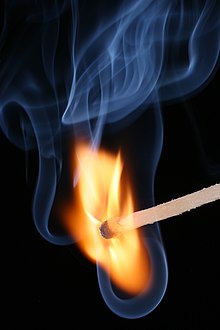
I have very few memories of Grandpa Neises.  He died when I was about nine.  He was burning weeds in the yard.  The fire got out of control and he had a heart attack.   When we got the news, Daddy cried.

   I remember Grandma Neises teaching me to write A,B,C.  


This was before I went to school.  Grandma had a little chest, like a small jewelry box, which she kept on a closet shelf and things that had belonged to Matilda, the daughter who had died suddenly at the table.  Since Joan's middle name was Matilda, Joan and I would stand there and look up at the box, and contemplate what marvelous things that box held for Joan.  (I believe she got it one day, but I never found out what it contained).

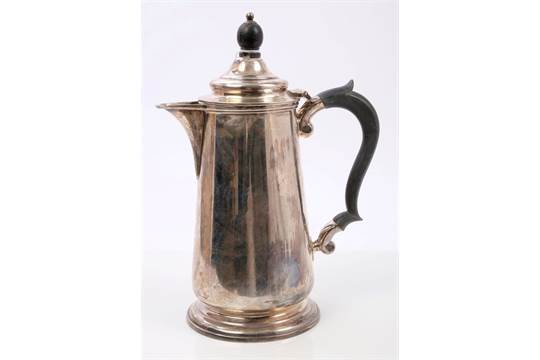
Grandma Neises died when I was about 14.  Joan and I stayed for the funeral.  They had her coffin in the parlor which was almost always closed off by a sliding wooden door.  All the relatives filed past. She had always worn a long grey or black dress as if she were in perpetual mourning. When she died, her face looked stern and sad, as I had always remembered it.  All the children got a small pile of treasures when the will was read.  We got a silver coffee pot, which I remember only as a dull grey object that sat on the China closet.


Saturday, 5 November 2016

Grandpa and Grandma Spader

Official U.S. data, 1920 U.S. Census. Grandma Rita's mother was Margaret Spader.

The Spaders

By Rita Wysong

(Note: from Spader Ancestry Book)
Peter Spaeder (Spader) and Mary Knappe Applegate were my mother's parents.  They were born in Germany.  Peter came to America at age 20, Mary came in 1888.  They were married April 17, 1893 in Plattsmouth, Nebraska.


Mother's parents came directly from Germany. Grandpa was Grandma's second husband.  Her first one had died.  They eventually settled in Howard, South Dakota. The old German ethic of hard work was very strong. They built a great big house, barn and other buildings. I don't know much about their early life or Mother's childhood. I used to ask about the Grandparents but got practically no information from Mother or Dad.  I do know they were hardworking, not given to frivolity.  I never remember hearing them speak In German, even to each other.


The head of the Spader clan was always my grandfather.  My grandmother died when I was about 12,  and I have little recollection of her, though I do think of her as a very quiet and mild person.  I remember her trying to thread a needle and she couldn't.  I was thinking how old she was, though I think she was relatively young when she died.  She just seemed old to me.  I do remember her favorite special dinner, delicious chicken and dumplings. 


At night, when I'd go to bed while staying there, Aunt Helen and Uncle Leo would get a big box of matches and light the little lamps on the way up the steps of a circular stairway (which was attached to the wall).  How I loved that soft bed with soft quilts and pillows (probably goose down).  However, if I had to go at night, I'd have to out to the privy.  Just knowing that would make me have to go.  I would come down the stairs, pitch black, go out to the kitchen, and to the toilet outside, with never a thought for a light. I don't think they had electricity until much later.  I remember the smell of the sulfur from the big matches and hearing Grandpa talk politics downstairs to Leo or visitors, and the strong smell of his pipe.


Once a friend of the family visited with a grown son in a wheelchair. Aunt Evelyn was there and couldn't bear the thought of looking at the boy, (falling over in his wheelchair, not able to say distinguishable words, and with little coordination or control), so she went upstairs and pretended she wasn't home. I was about 12 and was thinking of joining her, but decided I wouldn't.  I stayed downstairs when the lady came in.  She hugged me and kissed me and said how much she loved Mother.  The young man was a pitiful sight to me, but Grandpa  talked to him for hours in the dining room, just as if he were completely normal and insisted that the boy knew exactly what he said.  I really loved my Grandpa for that, and felt good about myself for not running upstairs like Evelyn.

Grandpa Spader lived in the family home in Howard with Leo and Helen.  I would visit for a week every summer.  

I'd ride with the mailman out to the farm.  He'd leave me off at Grandpa's mailbox and I'd walk the mile to the house.  The sunflowers were real high, crowding the corn.  The grasshoppers were thick and it was hot but I didn't care.  Once Leo and some neighbors were threshing as I walked into the yard.  Helen would call me "Hon" and I liked her fresh baked bread, honey and peanut butter that stuck to the roof of your mouth, for snacks between meals.  I'd go out to the fields and ride the horse, with the dog running along, and round up the cows in he evening.  It never occurred to me to be afraid of horses.  I just rode them.  I knew about trotting the horse to the mailbox each day for the mail, but I also would gallop them down the road.
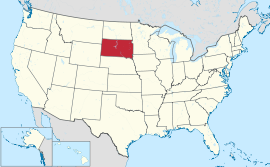
Map of the United States with South Dakota highlighted
The State of South Dakota.

Aunt Helen would greet me with a big hug.  It was usually so hot, that I would lie on the cold tile floor and listen to the phonograph.  I still remembered the operatic songs, even to adulthood.  I especially remember one called "Ramona".

  Grandpa used to make and bottle his own root beer, and I can still taste it. I remember the sounds of bottles exploding and breaking down in the cellar. 


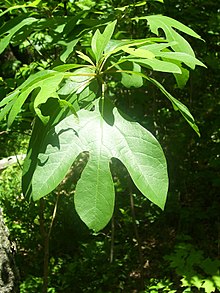
Sassafras7.jpg
Root beer is made from a common weed, called Sassafras.

When he came to our house when I was 7,  he wanted early spring dandelions for wine, so we kids picked a lot and got 10 cents a bag for them. 


When Grandpa visited us, he would tell us scary stories about the Black Forest and we were petrified.  


Relief Map of Germany, Black Forest.png
The Black Forest in Germany, far from South Dakota. 


Then, we'd beg him to tell us more. He was such a nice guy. He used to take me to Howard on Saturday, to Rafferty's Drug Store and buy me a double dip ice cream. 


File:1925.ford.model.t.arp.750pix.jpg
A Model T Ford.

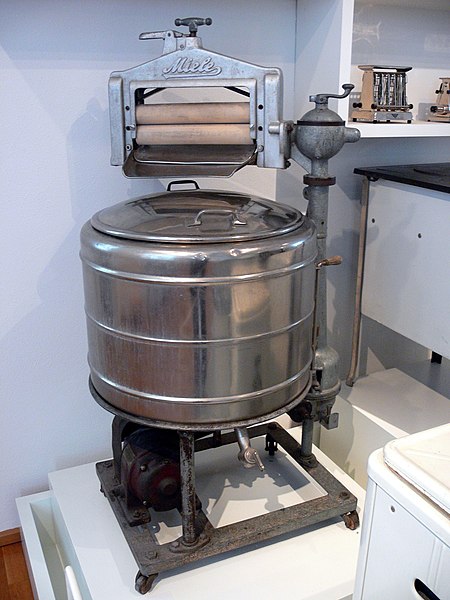
File:Miele 100.jpg
1930's wringer washer
(also called a "mangle"
for obvious reasons.)
Some other memories of Grandpa Spader.  When Minna was 3, she got her finger caught in a washing machine and was severely injured. Grandpa wheeled her in a buggy all the way from his farm to Howard.  It was before he had a car.  

At one time he had a Lincoln which was rarely used and a Model T.  I was going to church and finally got to ride in the Lincoln.  On the way, we saw a tipped over Model T and Helen's hat on the ground.  They had minor injuries. Normally I would have been riding with them.   I also remember a big hole in the wall leading into Grandpa's dining room.  Everyone knew that it happened when Grandpa was cleaning his gun and blew a hole in the wall.
1925 Lincoln

Grandpa would always drive the 40 miles from Howard to Mitchell for Corn Palace week.  It took so long that he would stop halfway and sleep in the car.  He was my favorite.  He even drove down for our graduation from high school.

When Grandpa was dying, I was sent up to Howard to "sit" with him.  I think he was about 75.  

Wednesday, 2 November 2016

Tales Of Christmas Past

Remembering Christmas!

By Grandma Rita


My first Christmas that I remember, I must have been 3 1/2,  Joan 2 1/2 and Eileen 1 1/2.  We lived on the farm.   There was a knock on the door.  I was scared so I hid behind the door as Santa came in.  He had a straw beard and I asked Mother why he had a straw beard.  He wheeled two doll carriages with dolls, for me and Joan. Eileen was a baby and was on the table in a playpen type thing.  This was a very special Christmas for us.

Another Christmas, I must have been about 5 when Elvera was born at my Grandpa Spader's house on January 10th.  We kids were at Grandma Neises' house.  There was Christmas candy and I remember the smell of real little candles burning on the Christmas tree at the bottom of the stairs.  We slept upstairs.  There was apparently no thought given to how dangerous this was, but the tree smelled so good.  I don't remember gifts until we went to the Spader home after Elvera's birth.  The whole dining room there seemed to be full of toys, baby dolls, little jewelry sets etc.  Joan and I would play under the table with our new dish sets.  I loved my grandparents so much.

A doormat into a Newberry's store. Newberry's was
a popular five-and-dime store across the Midwest, similar to Woolworth's.
When I was 7, we lived on 12th St. in Mitchell.  We had a happy St. Nicholas day, December 6, when St Nick threw candy and nuts in the door after knocking wildly!  Mother said Santa was delayed that Christmas (the gifts hadn't arrived from Sears Roebuck yet). When I was 10, Mother was still in the hospital after delivering Gene.  Daddy did his best.  There were only a few gifts, wrapped in white tissue paper and with writing that looked like Daddy's.  We always got oranges and nuts for the holiday and it was a real treat for us.


Dimes back then had an image of the god Mercury on them.
It wasn't until many years later that Franklin D. Roosevelt became President
and worked his way onto the front of the dime, where he's been ever since.
Dimes then were actually made of sterling silver, not an alloy, like today.
In 2016 terms, 10 cents in 1929 during the Depression was worth $1.41 today.
I remember another Christmas when we lived on North Main Street and I was around 13 years old.  My sisters and I had been out selling crepe paper butterflies.  Mother made them one winter to make money.  They were a novelty, made of crepe paper, and miniature clothespins painted with gold gilt.  People would pin them on drapes or whatever.  At first, I was terrified of going up to a stranger's house.  I would knock on the door and say, "Would you like to buy some butterflies? 10 cents each, or three for a quarter?"  We'd  sold a dozen or so, maybe more, that night.  Then, we ran all the way to Newberry's 10 cent store on Main Street.  We bought one gift for each person in the family.  Ten cents for a hankie, 10 cents for little jewelry sets, etc.  Then we rushed home and stood in a line and Mother and Daddy came in and we sang Christmas songs.


This is a 1935 dollar bill.
In 2016 money, it was worth $17.62.
If Great-Grandpa Neises worked 8 hours a day, in today's money he earned $2.20 an hour.


During the Depression, some years were very hard.  Daddy was making one dollar a day and riding to work on a bike. One year, Mother made us flannel pajamas and doll clothes for Christmas.  I'm sure she felt bad that we didn't have more.  The next day, the Lions Club, a charity organization, brought us a big bag of nice toys for each of us.  Daddy seemed embarrassed to accept charity and I'm sure we picked up on that.  We never made a big fuss about those toys and always appreciated the things Mother made for us.

I also remember some Christmas parties at the American Legion.  We got to go because Daddy was a World War I veteran, even though he had not gone overseas before the Armistice.  There was singing of Christmas songs and each child got a bag of nuts, oranges, and other goodies.  If any of our siblings couldn't come due to illness,  they would always give us extra to take home.  No matter what gifts we got, no matter how few, I know we appreciated them.

---------------------------------------------------------------------------------------------
From Wikipedia:
Saint Nicholas' Day, observed on December 6 (in Western Christian countries) and 19 December (in Eastern Christian countries), is the feast day of Saint Nicholas.[2] It is celebrated as a Christian festival with particular regard to his reputation as a bringer of gifts, as well as through the attendance of Mass or worship services.[3][4] In Europe, especially in "Germany and Poland, boys would dress as bishops begging alms for the poor."[5]  In the United States, one custom associated with Saint Nicholas Day is children leaving their shoes in the foyer on Saint Nicholas Eve in hope that Saint Nicholas will place some coins on the soles, for them to awake to.[2]  --

Monday, 26 September 2016

GROWING UP IN SOUTH DAKOTA 

BY GRANDMA RITA 

CornPalace2008.jpg
The Corn Palace was right near Grandma's house in Mitchell.

PART ONE:
I thought I would fill you in on some of the houses we lived in.  The first one I remember was a farmhouse near Howard  - about 40 miles from Mitchell.  I remember the porch and how Joan and I would go out in the yard and pick weeds and have little "parties"  with our dish sets.  All my relatives were poor and I think my Dad had bigger plans. We moved to a small house in Mitchell right next to the Corn Palace.  My Dad bought a building with a Mr. Lucken who had the bakery part of the shop and Daddy had the meat market. We were living in another house at this time that had a huge garden.  I remember how we kids used to go out and pick off the potato bugs from the plants. Mother grew all sorts of vegetables. I especially liked the tomatoes.

A South Dakota butcher shop 100 years ago.

I think it was just before the depression (I was about 7).  By this time - apparently we had more money at this time because we had a house with an indoor bathroom, running water and a furnace.  Wealthy indeed! Then I think the depression hit and we moved to another  house.  Not as nice but mother always saw to it that it was kept clean.  Famous words - "You can be poor but you do not have to be  dirty."

When I was about l2, we moved to North Main where we lived many years. Every spring Mother would climb on the dining room table and scrub the walls and ceilings with a hardy brush and strong soap.


The coal stove in the dining room produced a lot of coal fumes in the winter.  She would wash and starch all the curtains.  By Mother's Day everything was spotless. How did we manage - ll of us in a small house?  I can't imagine but we did it.

Nine Children Look Like This.

When I left home to join the Waves, I drew a salary working for the Navy Dept.  I sent money home to put in a bathroom and a bedroom up in the attic.  As we kids moved out and married there was a lot more room.


PART TWO:
Back again for the second installment on THE HOUSE ON MAIN ST.

At this time - the latter  30's, we somehow managed in cramped surroundings. Mother was still having babies - Bill was born when I was about l4.   Joan and I kept the place humming, cleaning, ironing (even ironed the pillow cases and Daddy's hankies). And Mother was doing all the canning, cooking and baking. Consequently, none of us knew how to cook when we got married.   We had to learn - I resorted to reading Betty Crocker's cook book.

Betty Crocker Cookbook

Daddy had long since lost his meat market - my parents never talked about these things or how poor we were, probably to keep us from worrying.  Unknown to any of us mother was saving up money to buy our house.  The rent was $l0 a month.  Mother began making little crepe paper butterflies (you could pin them on curtains. ) Very pretty. I think she sent away for instructions.  The body was a tiny clothespin. She used paints and gold gilt paint.  And for this work, she charged l0 cents each or 3 for a quarter. We kids made the rounds of Mitchell selling them.

Also,  in the fall when rich hunters descended on the state to go pheasant hunting, Mother cleaned their pheasants (I guess they then froze them).  She got very good at it and  could clean them fast.   She charged some incredible sum, maybe .l5 or .20 to clean each pheasant.  This, too, brought in some money which she must have put away for buying the house one day.

Pheasant.jpg
Pheasant.
We almost always had a Sunday dinner, special, with pies or a cake, and a white damask tablecloth on dining room table.  Don't ask me how ll of us were crammed around that table. The rest of the time we ate in the kitchen and had two planks between two chairs for most of us to sit on.  Whether it was a big pot of bean soup with neckbones (DELICIOUS), or stew or fish in the summer, a lot of pheasants in the fall and winter, and all those hundreds of vegetables canned down  in the cellar, and fresh bread once a week. It wasn't as good later, but I do remember the wonderful aroma of that bread.  The biggest surprise of my life was where did all that food for ll people come from?  Daddy would always provide and WE NEVER WENT HUNGRY.

Traditional Home-Canned Food.


Mother was known for her gorgeous flowers every summer.  She even lined the vegetable garden with marigolds. And I will never forget how we kids hauled in buckets, loads of flowers on Saturdays to Holy Family Church to be put on the altar for Sunday masses.

Holy Family Church, Mitchell, South Dakota. 

Then - we girls, one by one, left home and  of course, there was a lot more room, especially with the bedroom made from the attic.  And it was great having a real bonafide bathroom in one of the two downstairs bedrooms.

After Mother died, (we were in Sao Paulo at the time), we were transferred to Jidda.  About I year later,  I found that I was pregnant and since the place was primitive, we wives would go back to the states if we got pregnant.

1950's Maternity Clothes

We would have our babies here.  I went with Linda and Suzy to live with Daddy, Pat, Bill and Larry in THE HOUSE ON MAIN ST. After 6 months Bob joined us and we transferred to Calif. (he commuting to Mexico, across the border, each day. Also, Daddy  came out to live with us and sold the house.  Each of us got a few thousand dollars.  Erwin probably could have gotten more for it but  he did the best he could. The big garden alone was worth quite a bit. They were going to build a gas station on the plot where our house stood.

NAPA Auto Parts Store in Mitchell in current vicinity of 1006 North Main.

Our house was taken a few blocks away and left to deteriorate.  I am glad I didn't see it then.  I had remembered a house, poor for sure) but it was home.  When I would go on vacation to my grandfather's farm, I remember being so excited when the week was over, and couldn't wait to get home again.  I knew there would probably be some pie or cake left for me, as it would be a Sunday.  Even now when I hear the song "Going Home" I feel tearful.

PRESS THIS LINE OF TYPE TO HEAR "GOING HOME"

Well, to cut this story short, one vacation when we were visiting Joan and Erwin, we decided that we were going to GET EILEEN. She was the jokester of the family and had pulled her last joke. We decided to drive over to the HOUSE  which was lying on its side. Eileen snatched the sign l006 North Main from the front of the house and we left. Erwin had contacted a buddy policeman to play a joke on Eileen. So here we were sitting at a table outside at Joan's, when a policeman comes up with a warrant for Eileen's arrest for taking a sign off of an abandoned house.  Stealing, in other words.


Eileen almost choked on her food and got very red. I pretended to be crying since we two were planning to go back home together, (probably the next day and Eileen was headed for jail.) I peeked at Joan and she was laughing so hard, tears were rolling down her cheeks, (looking like sad tears).  After Eileen was presented with the papers about her arrest and saw Erwin's name on the bottom, she almost blew a gasket.

That was the last story I have about THE HOUSE ON MAIN ST.  I hope you were enlightened and not too bored.

PART THREE:
Hey, I forgot the most important part of my little story. 

The big news of all - (when we were at  our  Main St. house) Mary decided to arrive a bit early.  She was adorable and everyone loved BABY MARY.   Still do.  And she will always have a special place in my heart.  Her Daddy met her when she was around 3 months old. They had finally decided to send him back to join us when the original plan was for a few weeks.  I think your Dad also had a special place in his heart and I always felt Mary was her Daddy's girl.

So there you are, Linda, and now you know what happens when you send me an e-mail asking about the HOUSE ON MAIN ST.!!!!!!!!!


Tuesday, 31 May 2016